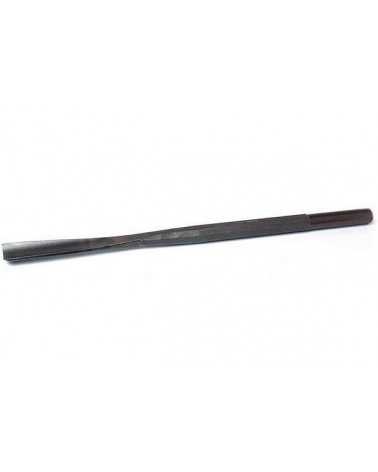
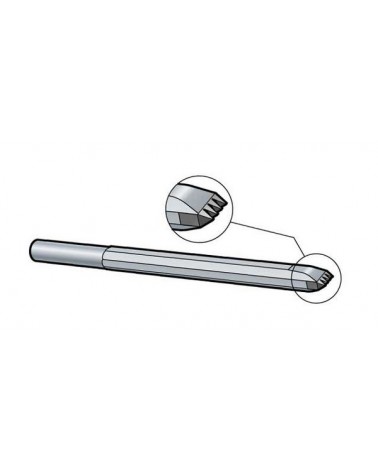
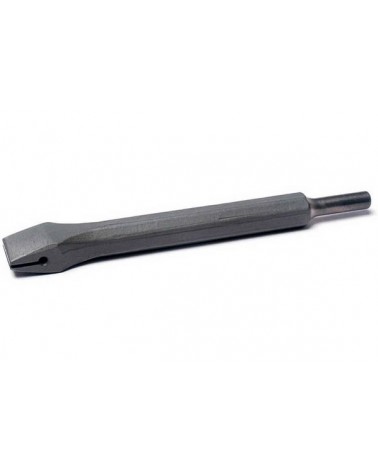
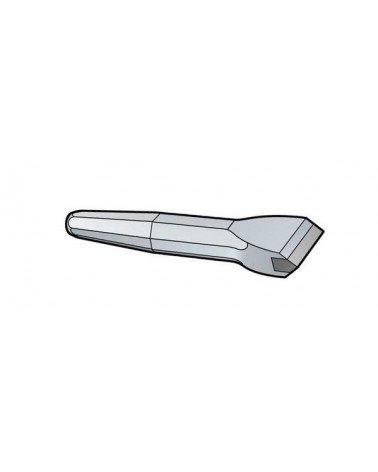
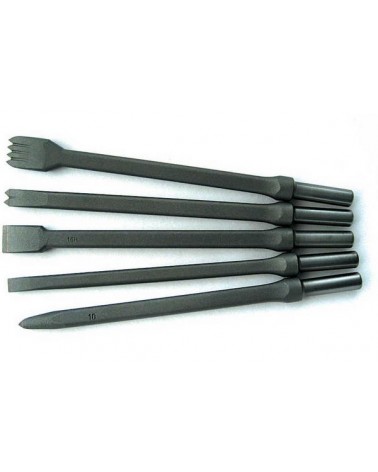
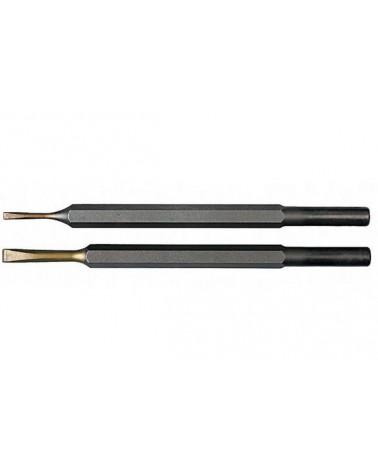
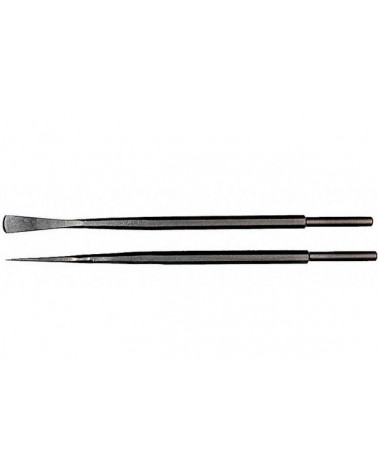
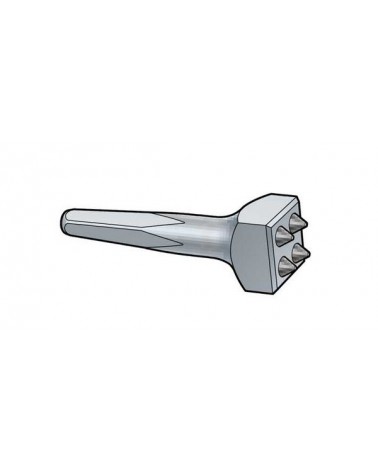
Diamont-Druckluft-Zweizahneisen mit Schaft 12,5 mm. Achtkantstahl. Gesamtlänge ca. 220 mm.
Die Zahneisen werden standardmäßig mit spitzen Zähnen ausgeliefert. Auf Wunsch sind sie ohne Aufpreis mit flachen Zähnen lieferbar.
Die Druckluft-Werkzeuge mit Hartmetall-Einsatz von BAVARIA eignen sich für Hartgestein wie Granit, aber auch für weichere Gesteinsarten wie Marmor oder harten Kalkstein.
Die Bezeichnung Diamont bezieht sich auf die große Härte von Wolframcarbid, dem Material, aus dem die Werkzeugschneiden gemacht sind. Diamont-Werkzeuge enthalten keine Diamantanteile.
Allgemeine Infos zu Hartmetall-Meißeln:
Bildhauereisen aus Hartmetall oder mit Hartmetall-Einsatz eignen sich besonders gut zur Bearbeitung harter Gesteinsarten. Hartmetall-Werkzeuge müssen bei der Arbeit seltener nachgeschäft werden, denn das Material ist so fest, dass es einen geringeren Abrieb gibt als bei Werkzeugen aus Schmiedestahl. Die Hartmetall-Schneide hat dadurch eine längere Standzeit. Werden Hartmetall-Meißel jedoch sehr spitz oder dünn angeschliffen, ist vorsichtiges Arbeiten erforderlich, da Hartmetall gerade aufgrund seiner Härte ein sprödes Material ist und dünn geschliffen leicht brechen kann. Auch hebelnde Bewegungen beim Schlagen können zu Bruch führen oder den Hartmetall-Stift aus dem Stahlmantel lösen.
Als Faustregel für Hartgestein gilt: Je härter der Stein ist, desto stumpfer sollte der Schneidwinkel des Meißels sein. Bei Hartgestein wie Granit wird der Meißel fast im rechten Winkel aufgesetzt und der Stein quasi pulverisiert. Der Meißel hat entsprechend eine sehr stumpfe Schneide. Für kristallines Gestein wie z.B. harten Marmor wird ein spitzeres Werkzeug mit schärferer Schneide benötigt. Der Meißel wird flach angesetzt, so dass der Stein abspringen kann, ohne dass die tieferliegende kristalline Struktur beschädigt wird.
Hartmetall-Meißel können auch für die Bearbeitung von Sandstein genutzt werden. Da Sandstein stark abrasiv wirkt, können Schmiedestahl-Meißel relativ schnell verschleißen. Hartmetall-Schneiden haben aufgrund ihrer Härte auch hier längere Standzeiten. Zu berücksichtigen ist jedoch, dass die Hartmetall-Stifte in der Regel in Stahl gefasst sind.
Für die Bearbeitung von Sandstein benutzt man wie für kristallines Gestein eher spitze Meißel: Bei dieser Gesteinsart geht es darum, beim Schlagen die Bindung zwischen den Sandpartikeln zu zerstören, wofür ein spitzes Werkzeug besser geeignet ist als ein stumpfes. Aber auch hier gilt: Bei sehr hartem Sandstein weniger spitze Meißel benutzen, die nicht so leicht brechen können.
Mehr über die Besonderheiten, die Produktion und die Qualität von BAVARIA Hartmetall-Werkzeugen erfahren Sie in einem Gespräch mit Andreas Weber, Inhaber von BAVARIA Steinmetzwerkzeuge.