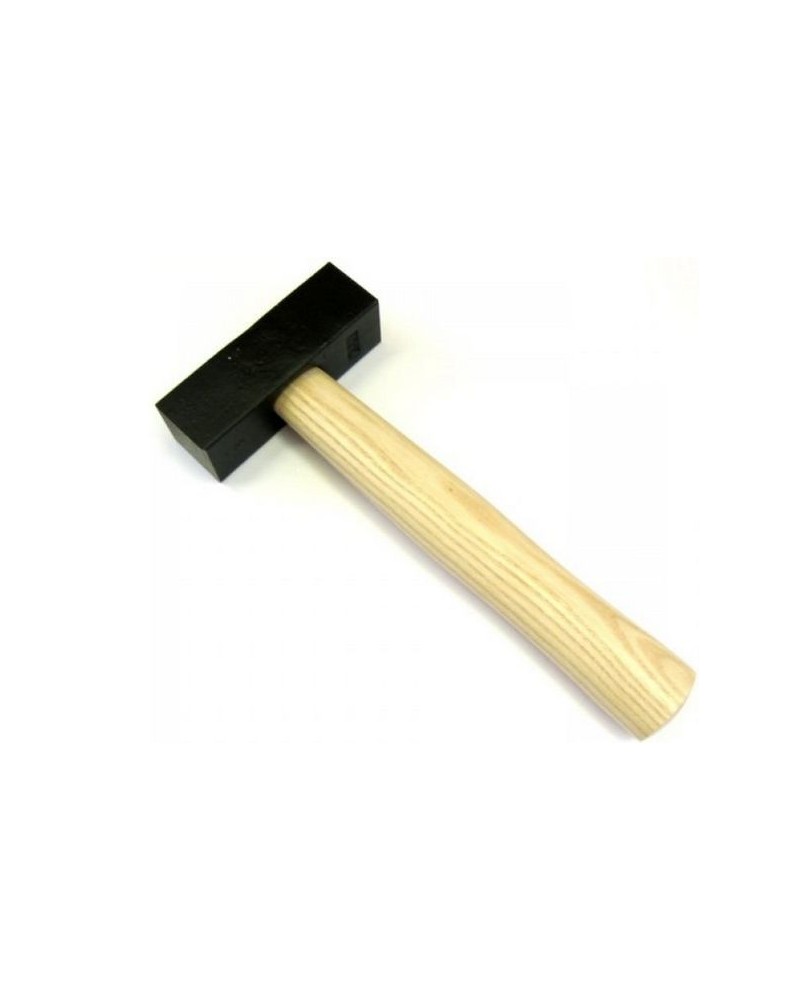
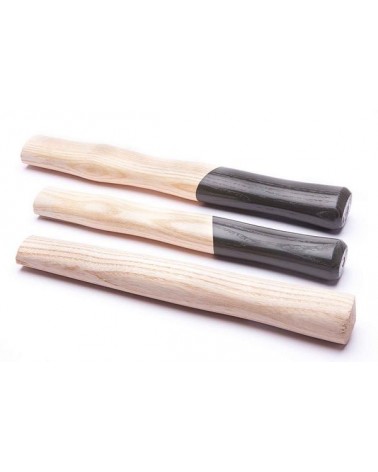
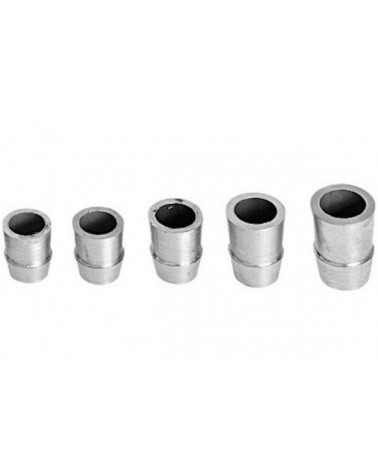
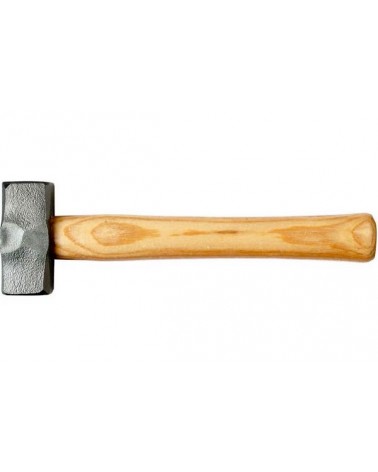
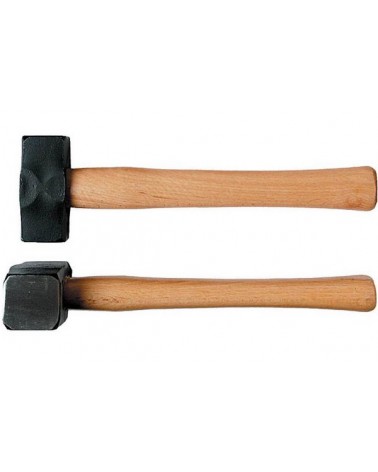
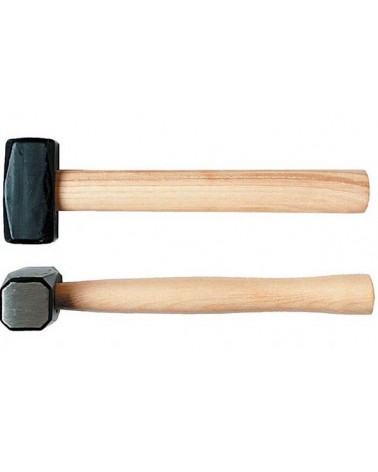
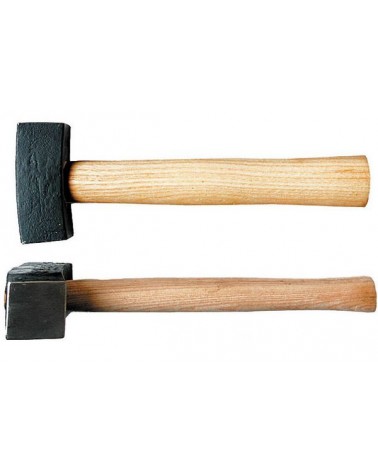
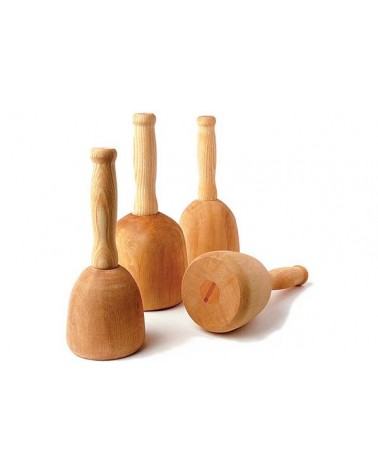
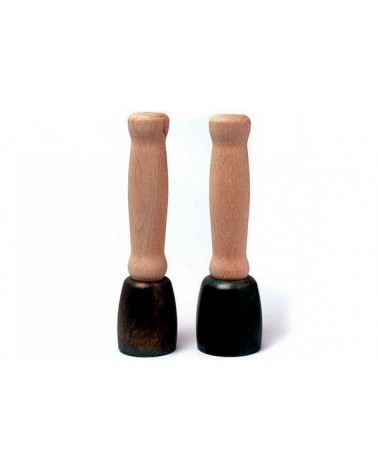
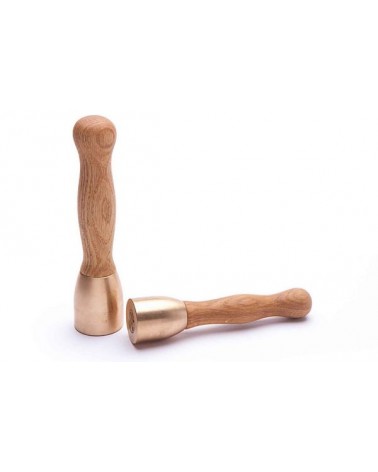
Fäustel aus Eisen oder Stahl. Der scharfkantige Stahl-Fäustel ist auch für Bossierarbeiten geeignet. Für Meißel mit Schlägelkopf. Kopf mit Schmiedespuren.
Eisen-Fäustel aus ungehärtetem Werkzeugstahl. Stahl-Fäustel aus gehärtetem Werkzeugstahl, auch zum Bossieren geeignet. Schlagwerkzeuge mit scharfen Kanten.
| Gewicht Fäustel: | Materialstärke: | Länge: |
| 500 g | 35 x 35 mm | 65 mm |
| 600 g | 35 x 35 mm | 75 mm |
| 750 g | 35 x 35 mm | 85 mm |
| 1000 g | 40 x 40 mm | 90 mm |
Der Schlag eines Stahlfäustels ist direkter als der eines Eisenfäustels. Der Stahlfäustel eignet sich z.B. sehr gut für grobe Arbeiten mit hohem Materialabtrag, z.B. mit Sprengeisen und Spitzeisen. Außerdem ist ein Stahlfäustel ein gutes Schlagwerkzeug für Hartmetallpreller z.B. für die Bearbeitung von Granit.
Der Schlag eines Eisenfäustels ist etwas gedämpfter als der eines Stahlfäustels. Der Eisenfäustel eignet sich deshalb sehr gut für alle Arbeiten an Marmor. Außerdem lassen sich mit dem Eisenfäustel und Zahn-, Flach- oder Schrifteisen sehr gut Oberflächen glätten und Details herausarbeiten.
Mit einem Fäustel, einem Eisen- wie einem Stahlfäustel, überträgt sich die Kraft des Schlags sehr direkt und kraftvoll auf den Stein. Fäustel eignen sich deshalb besonders gut zur Bearbeitung von kristallinen Gesteinen, wie z.B. Marmor, oder Gesteinen mit fester Bindung, wie z.B. härterem Kalkstein.
Stimmen Sie das Gewicht des Fäustels auf Ihre Meißel ab - zur groben Orientierung können folgende Angaben dienen:
| Meißel-Durchmesser: | Gewicht Fäustel: |
| 8 mm - 10 mm | bis zu 500 g |
| 10 mm - 12 mm | bis zu 600 g |
| 12 mm - 14 mm | bis zu 750 g |
| 14 mm - 16 mm | bis zu 900 g |