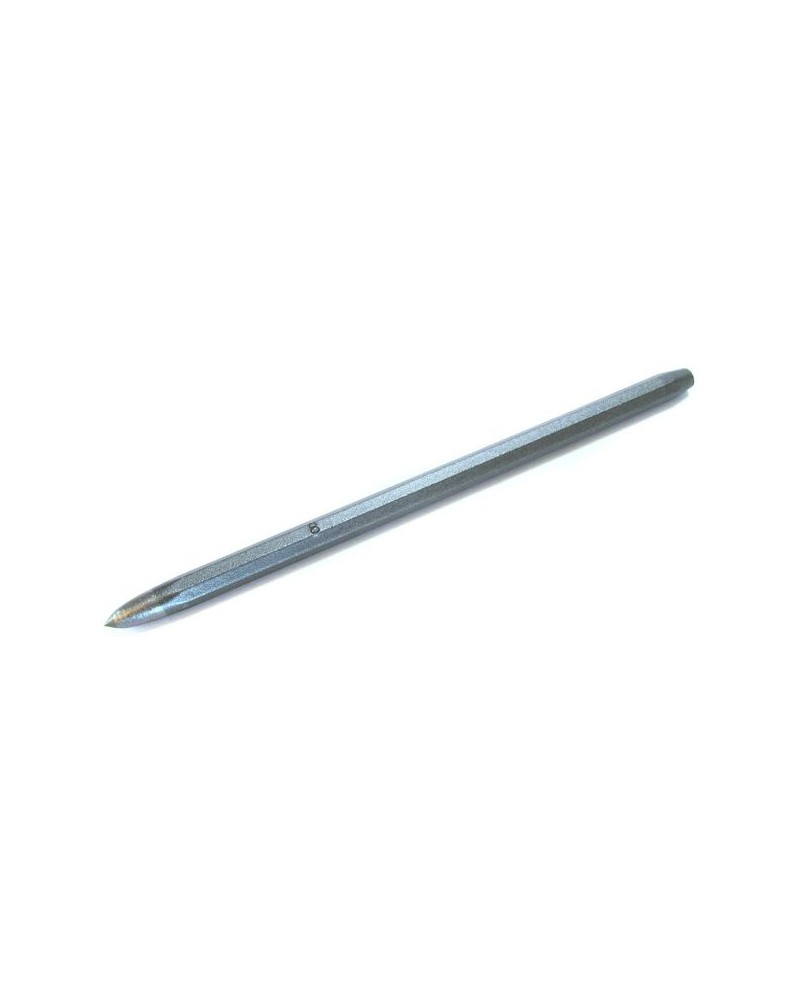
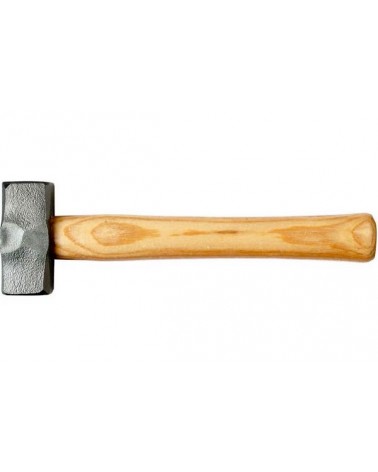
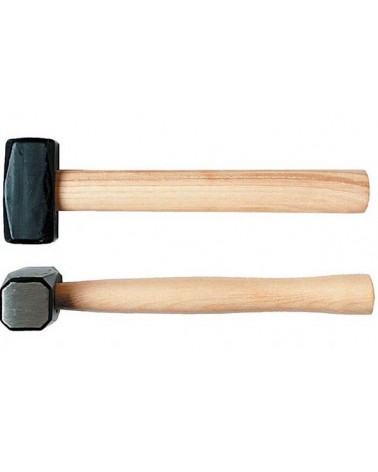
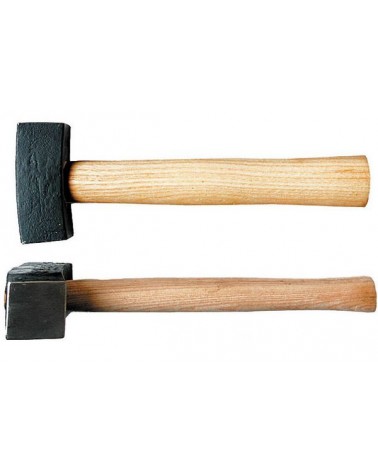
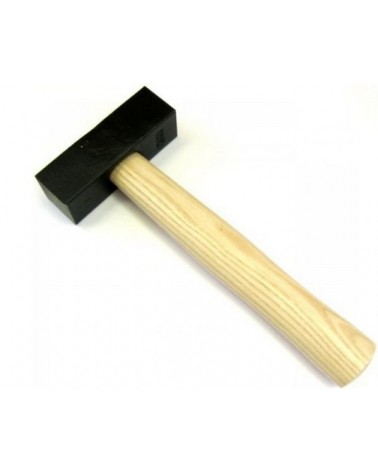
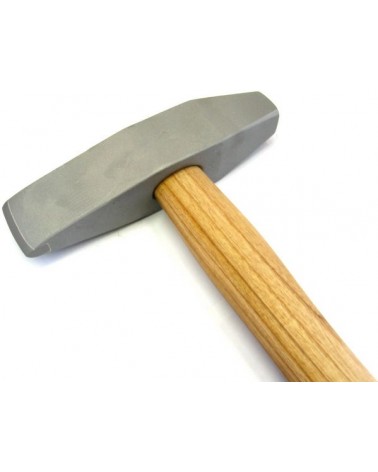
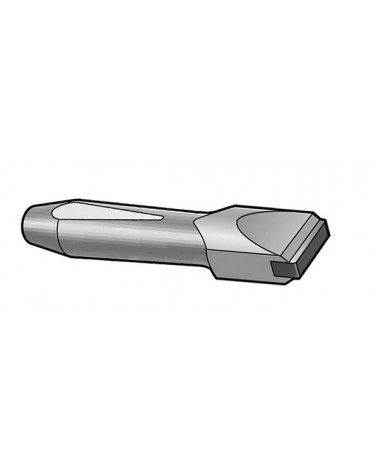
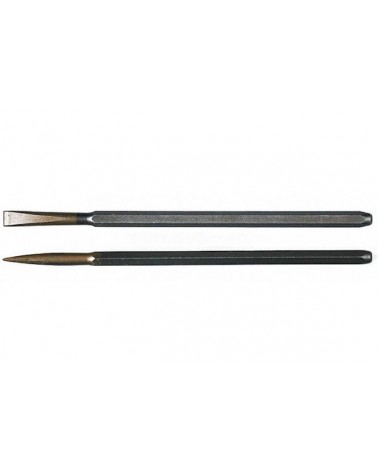
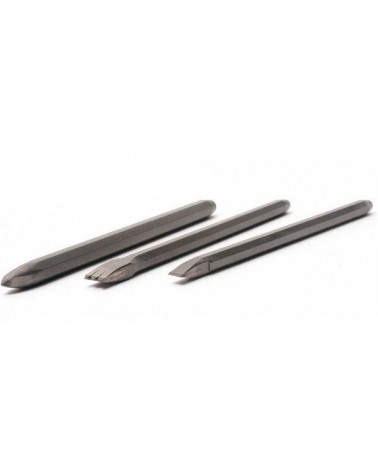
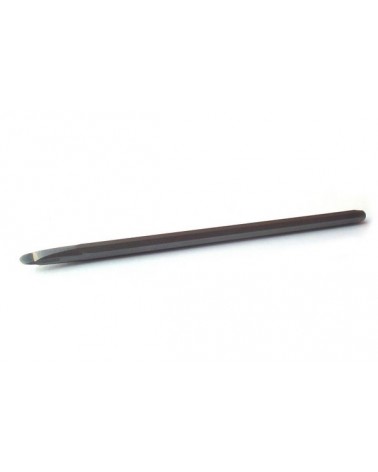
Diamont-Spitzeisen. Mit Schlägelkopf u.a. zur Bearbeitung von Granit. Länge ca. 250 mm. Aus Achtkantstahl. Mit konischem Schliff.
Die Länge des Hartmetall-Stifts beträgt bei allen Spitzeisen 20 mm. Der Durchmesser des Hartmetallstifts beträgt bei den Eisen
8 x 8 mm: Ø 4 mm
10 x 10 mm: Ø 5 mm
12 x 12 mm: Ø 5 mm
14 x 14 mm: Ø 6 mm
16 x 16 mm: Ø 6 mm
Die BAVARIA-Werkzeuge mit Hartmetall-Einsatz eignen sich für Hartgestein wie Granit, aber auch für weichere Gesteinsarten wie Marmor oder harten Kalkstein.
Die Bezeichnung Diamont bezieht sich auf die große Härte von Wolframcarbid, dem Material, aus dem die Werkzeugschneiden gemacht sind. Diamont-Werkzeuge enthalten keine Diamantanteile.
Allgemeine Infos zu Hartmetall-Meißeln:
Hartmetall-Spitzeisen gibt es mit konischem Schliff und seltener mit pyramidalem Schliff. Die pyramidal geschliffenen Werkzeuge kommen ursprünglich aus Italien und eignen sich sehr gut für die Bearbeitung von kristallinen Gesteinsarten wie Marmor. Für Sandstein, harten Kalkstein und Granit werden eher konisch geschliffene Meißel eingesetzt.
Bildhauereisen aus Hartmetall oder mit Hartmetall-Einsatz eignen sich besonders gut zur Bearbeitung harter Gesteinsarten. Hartmetall-Werkzeuge müssen bei der Arbeit seltener nachgeschärft werden, denn das Material ist so fest, dass es einen geringeren Abrieb gibt als bei Werkzeugen aus Schmiedestahl. Die Hartmetall-Schneide hat dadurch eine längere Standzeit. Werden Hartmetall-Meißel jedoch sehr spitz oder dünn angeschliffen, ist vorsichtiges Arbeiten erforderlich, da Hartmetall gerade aufgrund seiner Härte ein sprödes Material ist und dünn geschliffen leicht brechen kann. Auch hebelnde Bewegungen beim Schlagen können zu Bruch führen oder den Hartmetall-Stift aus dem Stahlmantel lösen.
Als Faustregel für Hartgestein gilt: Je härter der Stein ist, desto stumpfer sollte der Schneidwinkel des Meißels sein. Bei Hartgestein wie Granit wird der Meißel fast im rechten Winkel aufgesetzt und der Stein quasi pulverisiert. Der Meißel hat entsprechend eine sehr stumpfe Schneide. Für kristallines Gestein wie z.B. harten Marmor wird ein spitzeres Werkzeug mit schärferer Schneide benötigt. Der Meißel wird flach angesetzt, so dass der Stein abspringen kann, ohne dass die tieferliegende kristalline Struktur beschädigt wird.
Mehr über die Besonderheiten, die Produktion und die Qualität von BAVARIA Hartmetall-Werkzeugen erfahren Sie in einem Gespräch mit Andreas Weber, Inhaber von BAVARIA Steinmetzwerkzeuge.